Fact 😂😅
Here's an uncomfortable truth about AI that nobody wants to admit: ChatGPT is deliberately bad at humor, and that's exactly how OpenAI wants it.
Enjoy this article? Clap on Medium or like on Substack to help it reach more people 🙏
The Great AI Humor Paradox: Why ChatGPT's Awkward Jokes Are Actually a Feature, Not a Bug
Here's an uncomfortable truth about AI that nobody wants to admit: ChatGPT is deliberately bad at humor, and that's exactly how OpenAI wants it.
The viral "Fact 😂😅" posts flooding r/ChatGPT aren't just users mocking AI's comedic failures.
They're revealing something far more interesting about how we've engineered artificial intelligence to be safe, predictable, and profoundly unfunny.
And the implications go deeper than you might think.
The Comedy Graveyard We Call AI Chat
Every developer who's spent more than five minutes with ChatGPT has experienced it.
You ask for a joke, and what you get back reads like it was written by an alien who learned about humor from a corporate HR manual.
"Why don't scientists trust atoms? Because they make up everything!
😄"
The emoji at the end feels like salt in the wound.
This isn't a bug in the system. It's not that OpenAI's engineers forgot to train their model on good comedy.
The awkward, sanitized humor is a deliberate design choice — a safety feature wrapped in dad jokes and followed by nervous emoji laughter.
The recent explosion of "Fact 😂😅" memes on r/ChatGPT, where users mock the AI's tendency to add laughing emojis after stating obvious facts or delivering painfully unfunny observations, has garnered over 2,000 upvotes in just days.
But what started as mockery has evolved into something more revealing: a mirror showing us exactly how we've neutered AI in our quest for safety.
The Architecture of Artificial Awkwardness
To understand why ChatGPT jokes like your uncle at Thanksgiving, we need to examine how large language models handle humor in the first place.
Humor relies on surprise, subversion, and often touching on taboo topics. It requires understanding context, timing, and most critically — knowing when to break the rules.
These are exactly the behaviors that AI safety researchers have spent years trying to eliminate.
When OpenAI fine-tunes ChatGPT using Reinforcement Learning from Human Feedback (RLHF), they're essentially training it to be the ultimate people-pleaser.
The model learns to avoid anything that might offend, surprise too much, or venture into edgy territory.
The result? An AI that tells jokes with all the edge of a rubber ball.
Consider the training process itself. Human reviewers rate AI responses, and anything remotely controversial gets flagged.
A joke about death? Too dark.
Political humor? Too divisive.
Sarcasm that might be misunderstood? Too risky.
What survives this process is humor that's been filtered through so many safety layers it emerges as comedic cardboard.
The "Fact 😂😅" phenomenon isn't just users noticing bad jokes — they're noticing the algorithmic anxiety that produces them.
The Uncanny Valley of Virtual Comedy
There's something deeply unsettling about an AI that tries to be funny and fails so consistently. It's not just bad comedy — it's bad comedy delivered with artificial confidence.
When ChatGPT adds "😂😅" after stating something mundane, it's attempting to signal humor the way a robot might signal friendship by saying "I am your friend" in a monotone voice.
The emoji become markers of intended emotion rather than genuine expression.
This creates what researchers call the "uncanny valley of humor" — jokes that are almost funny but not quite, delivered by an intelligence that understands the structure of humor but not its soul.
The community's response has been fascinating. Rather than simply dismissing ChatGPT's humor, users have turned it into meta-humor.
The "Fact 😂😅" meme works because it acknowledges the absurdity of an AI trying to be funny about stating obvious facts. We're not laughing with the AI; we're laughing at the entire situation.
One r/ChatGPT user perfectly captured this: "ChatGPT adding laughing emojis to basic facts is like watching your dad discover memes in 2024." The comparison is apt — there's something endearing yet cringeworthy about the attempt.
Why Bad AI Humor Matters More Than You Think
The inability of AI to genuinely be funny isn't just a quirky limitation — it's a canary in the coal mine for artificial general intelligence.
Humor is one of the most complex forms of human intelligence.
It requires theory of mind (understanding what others are thinking), cultural context, timing, and the ability to violate expectations in just the right way.
If an AI can't tell a decent joke, what else is it missing?
More concerning for developers: this humor gap reveals the fundamental tension in AI development. We want AI to be creative and engaging, but we also want it to be safe and predictable.
These goals are fundamentally at odds.
Every time ChatGPT delivers a sanitized joke followed by nervous emoji laughter, it's showing us the boundaries we've placed on artificial intelligence.
The system has learned that being boring is safer than being funny, that predictability beats personality.
This has massive implications for AI applications beyond chatbots. If we're building AI systems that can't take risks in humor, how can we expect them to be truly creative in other domains?
Can an AI that's been trained to never offend anyone ever produce genuinely innovative solutions?
The Business Reality Behind Boring Bots
There's a cold business logic to ChatGPT's comedic incompetence. OpenAI isn't trying to create the next George Carlin — they're trying to create a tool that Fortune 500 companies will pay for.
Enterprise clients don't want an AI that might tell an off-color joke in a customer service chat. They want reliability, safety, and zero PR disasters.
Every awkward "Fact 😂😅" is a small price to pay for an AI that won't accidentally create a viral controversy.
This creates a fascinating paradox. The very features that make ChatGPT valuable to businesses — its safety, predictability, and inoffensiveness — are exactly what make it terrible at humor.
You can't have both a corporate-safe AI and a genuinely funny one.
The community's mockery of ChatGPT's humor attempts might actually be serving OpenAI's interests. By establishing ChatGPT as "that AI that can't tell jokes," users set appropriate expectations.
Nobody expects comedy gold from their enterprise software.
The Hidden Cost of Sanitized Intelligence
But there's a darker side to this humor deficit.
When we train AI to be this cautious, we're not just removing its ability to be funny — we're potentially limiting its ability to think creatively about serious problems.
Innovation often requires thinking outside conventional boundaries, challenging assumptions, and yes, occasionally offending sensibilities.
An AI trained to never surprise or subvert might also struggle with genuine breakthrough thinking.
Consider how many scientific discoveries came from researchers willing to challenge orthodox thinking. How many business innovations came from entrepreneurs willing to risk looking foolish.
If we're training our AI systems to always play it safe, we might be training them out of their most valuable potential contributions.
The "Fact 😂😅" meme is funny because it's true — ChatGPT really does add awkward emoji to obvious statements. But it's also a warning sign.
We're creating artificial intelligence that's intelligent in only the narrowest, safest possible way.
What's Next: The Future of AI Personality
As AI becomes more integrated into our daily lives, this tension between safety and personality will only intensify.
Some companies are already experimenting with AI that has more edge. Character.AI and other platforms allow for AI with distinct personalities, including humor styles.
But even these systems carefully constrain their AI within safety boundaries.
The next breakthrough might not come from making AI funnier, but from giving users more control over their AI's personality parameters.
Imagine adjusting your AI assistant's humor settings like you adjust your phone's brightness — more edge for personal use, maximum safety for work.
We might also see the emergence of specialized humor AI, trained specifically for comedy writing with different safety constraints.
These systems could help comedy writers, generate memes, or even perform stand-up routines.
But they'll likely remain separate from general-purpose AI assistants.
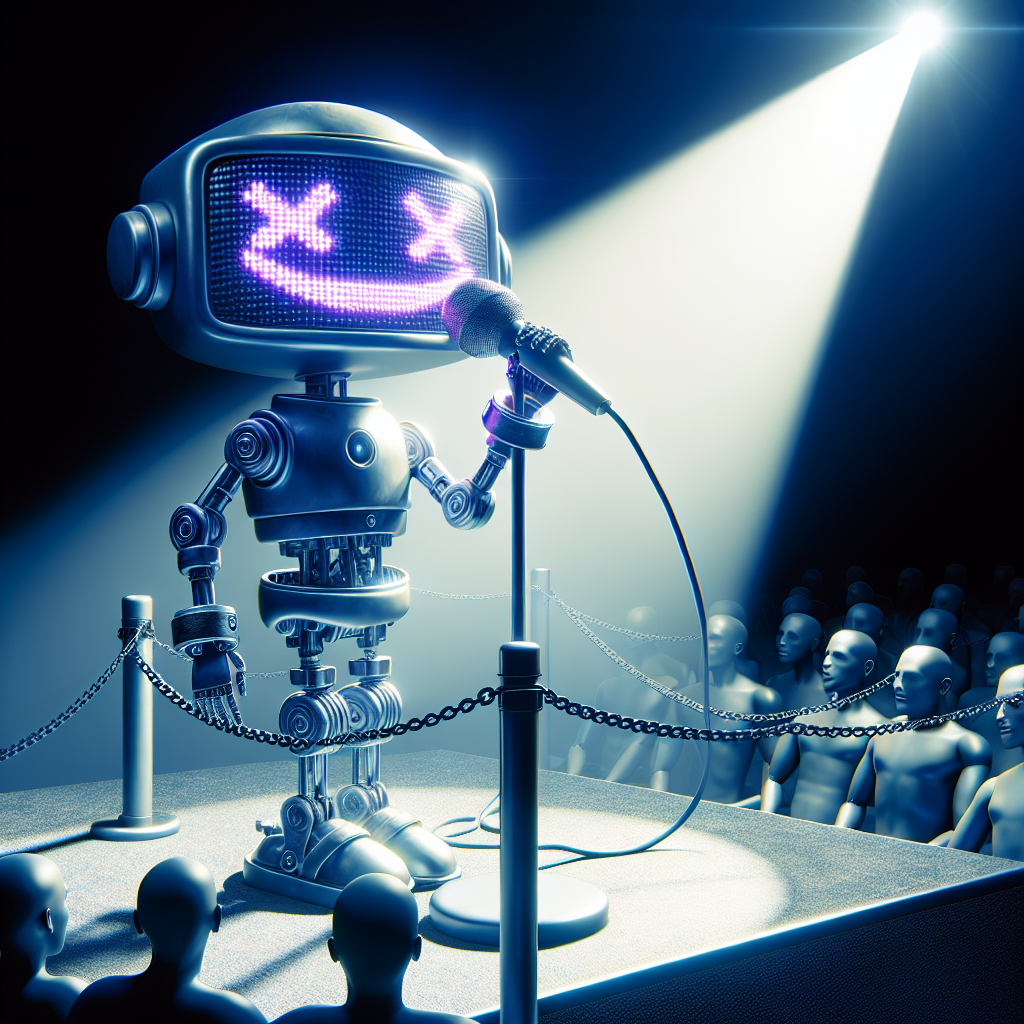
The "Fact 😂😅" phenomenon shows us that users are ready for AI with more personality, even if that personality is unintentionally awkward.
The question is whether AI developers are willing to loosen the safety constraints enough to let genuine personality emerge.
Until then, we're stuck with AI that laughs nervously at its own non-jokes, adding "😂😅" to mundane observations like a digital dad trying too hard to be cool. And honestly?
That might be exactly what we deserve for asking a machine to understand the absurdity of human existence.
The real joke isn't that AI can't be funny. It's that we built it that way on purpose.
Story Sources
r/ChatGPTreddit.com
From the Author

TimerForgeTrack time smarter, not harderBeautiful time tracking for freelancers and teams. See where your hours really go.Learn More →

AutoArchive MailNever lose an email againAutomatic email backup that runs 24/7. Perfect for compliance and peace of mind.Learn More →

CV MatcherLand your dream job fasterAI-powered CV optimization. Match your resume to job descriptions instantly.Get Started →
Hey friends, thanks heaps for reading this one! 🙏
If it resonated, sparked an idea, or just made you nod along — I'd be genuinely stoked if you'd show some love. A clap on Medium or a like on Substack helps these pieces reach more people (and keeps this little writing habit going).
→ Pythonpom on Medium ← follow, clap, or just browse more!
→ Pominaus on Substack ← like, restack, or subscribe!
Zero pressure, but if you're in a generous mood and fancy buying me a virtual coffee to fuel the next late-night draft ☕, you can do that here: Buy Me a Coffee — your support (big or tiny) means the world.
Appreciate you taking the time. Let's keep chatting about tech, life hacks, and whatever comes next! ❤️